Why Is Debate So Important? Benefits of Debate for Students and Beyond
Debate is important because it teaches people how to think clearly under pressure, communicate with confidence, evaluate evidence, and understand opposing views. The habits built in debate improve learning, leadership, teamwork, and real-world decision-making long after school ends.
In fact, debate is often called a “valuable activity for students of all skill levels” because it teaches critical thinking, communication, and other essential life skills to an elite level. By engaging in structured arguments on various topics, students deeply engage with what they’re learning and gain profound skills that go well beyond the classroome.
Key takeaways
Debate is important because it helps students become:
- stronger thinkers (analysis, logic, evidence)
- stronger communicators (clarity, persuasion, listening)
- stronger learners (reading, writing, research habits)
- stronger people (confidence, resilience, leadership)
- stronger teammates (collaboration, respect, empathy)
- stronger citizens (informed, rational, constructive)
In short: debate creates people who can handle complexity without losing clarity.
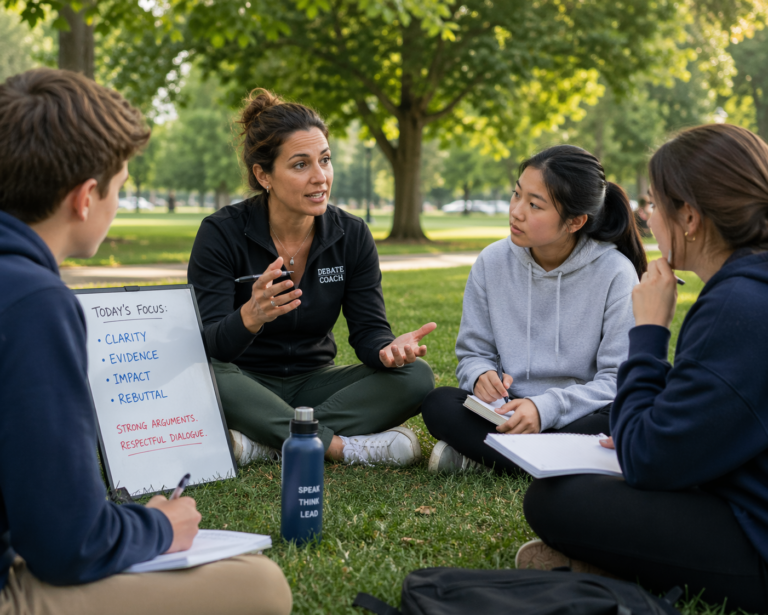
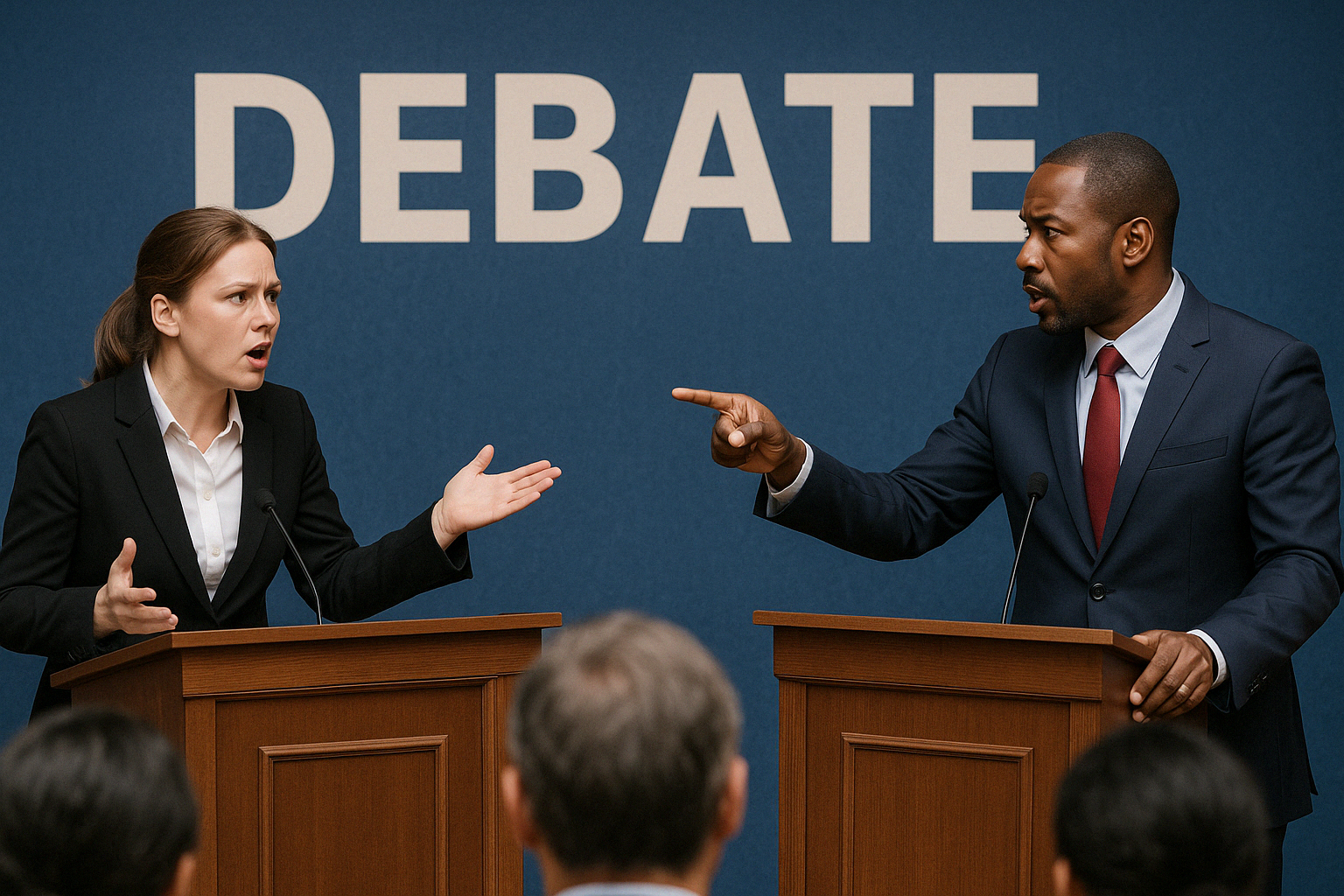
Students in a classroom engage in a lively debate, building confidence and communication skills through structured discussion. Debate activities create a dynamic learning environment where participants learn to express ideas clearly and think critically on the spot.
Sharpening Critical Thinking and Problem-Solving
One of the greatest benefits of debate is how it sharpens critical thinking skills. In a debate, you must analyze complex topics, consider multiple viewpoints, and formulate logical arguments under time pressure. This process trains you to break down problems and evaluate evidence rigorously. Studies published in PubMed have shown that debate develops students’ critical thinking abilities.
For example, a 2023 educational study found that a school debate program improved students’ analytical skills as part of boosting their literacy performance. Debaters learn to “see both sides of issues” and hold opposing ideas in mind while still making rational decisions – a hallmark of high-level critical thinking. By preparing for competitions, debaters also gain research skills, learning to gather facts and assess sources to back up their claims. All of this practice in analysis and reasoning makes debate participants adept at problem-solving in academic work and real-life situations.
Debate teaches you how to think, not just what to think, which is why it’s so important for developing an inquisitive, agile mind. You become your own person as you utilize your brain to its true depth.
Improving Communication and Public Speaking Skills
Effective communication is at the core of any debate. As a result, debaters dramatically improve their communication skills – both in speaking and writing. Arguing a case within strict time limits forces you to express your ideas clearly, concisely, and persuasively. Over time, debaters gain confidence speaking in public and expressing their ideas eloquently.
This comfort with public speaking is incredibly useful in many areas of life, from class presentations to job interviews. In fact, debate is known to enhance students’ oral and written communication skills, since you must articulate arguments out loud and often write briefs or case notes.
Debate also helps conquer the common fear of public speaking. Glossophobia – the fear of speaking in public – affects an estimated 77% of people to some degree. Participating in debate provides a supportive environment to practice speaking regularly, which gradually reduces anxiety. Many former shy students find that debate gives them the confidence to speak up.
As they engage in more debates, their stage fright diminishes and their poise improves. Research confirms that debate “enhance[s] communication” skills in students. By learning how to organize thoughts and present them convincingly, debaters become strong communicators who can command an audience’s attention – a skill that benefits presentations, interviews, and any situation where clear communication is key.
Boosting Academic Performance and Engagement
Academic debate doesn’t just build skills in theory – it has concrete benefits for students’ academic performance. Numerous studies have found that students who participate in debate show improved outcomes in school. For instance, a recent study of public school students in Boston showed that those who joined a debate program saw meaningful improvements in English Language Arts test scores and were more likely to graduate high school and attend college.
More broadly, students who debate tend to have higher grades and greater academic engagement. Studies across the country have found that high school debate participation is linked to better reading ability, higher GPAs, improved school attendance, and even increased self-esteem and interest in school. Debate keeps students actively involved in learning – they must research topics, think deeply about content, and form arguments, which makes the subject matter more engaging than rote memorization. It’s not surprising that debaters often become more curious and knowledgeable about a wide range of issues, from history and science to current events.
How Debate Boosts Academic Motivation and Performance
Debate turns learning into an engaging, competitive experience that naturally pushes students to give their best. Here’s how it strengthens academic success:
- Makes learning feel like a game — the competitive format keeps students energized and invested.
- Boosts motivation — students work harder because they want to persuade judges and outperform opponents.
- Encourages deeper research — debaters study topics far more thoroughly than they would for standard assignments.
- Builds pride and ownership — defending a position gives students a sense of accomplishment and purpose.
- Improves academic skills — reading, writing, organization, and analytical thinking all strengthen through debate prep.
- Enhances college applications — debate signals strong communication, reasoning ability, and intellectual maturity.
Some universities even offer scholarships specifically for skilled college debaters, underscoring how much value higher education places on debate experience.
Building Confidence, Leadership, and Personal Growth
Another reason debate is so important is that it builds self-confidence and leadership skills. Standing up to speak in front of others and defending your ideas can be intimidating at first, but with each debate, students become more self-assured. Debate offers an ideal setting to instill confidence in students so they learn how to use their voice effectively. As you learn to present arguments and handle questions, you develop poise and overcome the fear of being challenged.
Debate also hones your leadership and persuasion abilities. Within debate teams, students often take on leadership roles, whether it’s captaining a team, organizing research, or mentoring newer members. You learn to think strategically, make quick decisions, and guide a team under pressure, all classic leadership qualities. Moreover, the art of persuasion learned in debate is essentially the art of leadership: convincing others to be inspired by your point of view.
How Debate Builds Confidence, Resilience, and Leadership
Debate pushes students to think independently and step outside their comfort zone, shaping their character in meaningful ways:
- Creates future leaders — alumni often excel in college and beyond because they’ve practiced confident decision-making under adversity.
- Develops resilience — students learn to face challenges, handle pressure, and bounce back from setbacks.
- Builds character — debating tough ideas strengthens maturity, composure, and emotional discipline.
- Teaches constructive winning and losing — victory and defeat become opportunities for professionalism and growth.
- Encourages a growth mindset — judges’ and coaches’ feedback helps students improve continuously.
- Strengthens determination — after debating difficult topics, students feel more capable of tackling real-life challenges.
- Fosters leadership — debaters learn to speak up, take initiative, and stay confident even in high-stress situations.
Enhancing Teamwork, Empathy, and Social Skills
Debate might seem like a battle of wits between opponents, but it’s also a team activity and a social learning experience. In most debate formats, you work with a partner or a team to prepare your case , dividing research tasks, brainstorming arguments, and strategizing together. This collaborative process means debate inherently encourages teamwork. Students in debate learn to work in a cooperative group setting, pooling their strengths to build the best argument.
Classroom debates “strengthen skills in the areas of leadership, interpersonal influence, teambuilding, group problem solving, and oral presentation”. In other words, debate requires you to coordinate with others, listen to teammates, and perhaps even lead group discussions – all excellent practice for teamwork in school projects, jobs, and community activities.
Beyond collaboration, debate teaches respect and empathy for different perspectives. A good debater must not only present their own side but also understand the opponent’s case to rebut it effectively. This means you’re constantly putting yourself in someone else’s shoes. Debaters become skilled at active listening – paying close attention to what others say – and responding thoughtfully. They also learn to disagree without being disagreeable, maintaining civility and respect.
Preparing for Career Success and Civic Life
The importance of debate extends into one’s future career and role as a citizen. Simply put, the skills gained in debate are highly transferable to professional success. Almost any job that involves communication (which is most, if not all, jobs!) will value the abilities to think critically, communicate clearly, and persuade others. Debaters enter college and the workforce with an edge: they are used to formulating arguments, speaking confidently, and handling challenging questions on the fly.
Employers frequently cite communication and critical thinking among the top soft skills they seek, and debate provides abundant training in both. It’s telling that many accomplished professionals like lawyers, public officials, business executives, educators, and more, have a background in debate.
According to the Stanford National Forensic Institute, you’ll find former debaters in every area of public life, and about 60% of U.S. Congressional representatives participated in debate, as well as a third of Supreme Court justices. This doesn’t mean debate automatically makes you a senator or a CEO, of course – but it underscores that debate equips people for leadership roles. The persuasion, public speaking, and argumentation skills honed in debate are directly applicable to careers in law, politics, policy, journalism, marketing, and management, to name just a few.
Even in technical or scientific fields, debate experience can be a huge asset. Scientists and engineers need to present their ideas and convince others of their merit (think of pitching a research proposal or debating ethics in technology). The structured thinking and clarity of expression that debate teaches can make someone a better writer, a clearer instructor, or a more persuasive team leader. Indeed, the former U.S. Secretary of Education Arne Duncan remarked that debate is “uniquely suited” to build the skills required of a modern citizen, including critical thinking, communication, collaboration, and creativity. These skills are exactly what companies and organizations desire in the 21st-century workplace.
Debate also prepares students to be active, informed citizens. In a debate, you’re often grappling with current events, public policies, and ethical dilemmas. This exposure means debaters typically stay more informed about civic issues and learn how to evaluate arguments in the media or politics critically.
Quick Debate FAQ:
No. Debate builds speaking confidence over time and formats like written debate work especially well for quieter students.
Good debate teaches respectful disagreement, listening, and evidence-based thinking, not pointless fighting.
Students can start with simple, structured discussions in elementary school and scale into formal debate in middle and high school.
Yes. Most benefits come from the skills practice: research, reasoning, speaking, listening, and feedback.
It improves decision-making, persuasion, interview performance, teamwork, and the ability to handle objections calmly.